
Checking Criminal History in Alachua County
The Alachua County Clerk's online court-record search is the main county case channel. It accepts a last and first name, case number, date of birth, filing dates, party type, and case type. Start broad. Too many criteria can hide a valid result when a spelling, date, status, or case format differs from an assumption. The Clerk calls party and status searches very limited unless another identifying field is added.
Match a result with more than a name. Compare birth date where shown, aliases, case number, filing date, charge, and agency. Then move to the source that answers the actual question.
- Identify whether the needed item is a police report, booking, court case, warrant, or statewide history.
- Search the responsible office with a full name, spelling variants, and date of birth when available.
- Compare identifiers and case details before treating a result as a match.
- Pull the underlying report, booking detail, docket, or final order from its custodian.
- Request a certified Clerk copy or official FDLE check when that form is required.
The Clerk's case-number format has a local trap. Do not enter the “01” county prefix in its search box. Uniform numbering began in 1999, so an older case may not match a modern number format. Record both the displayed local number and the complete number printed on a document, then follow the portal's entry rule. A company field is only for an organizational party, not an individual or alias.
| Search Field | How to Use It |
|---|---|
| Last and first name | Best broad starting point; try spelling variants |
| Date of birth | Helps distinguish people with similar names |
| Case number | Omit the local search box's “01” county prefix |
| Filing date range | Add only when a broad name search returns too many cases |
| Party or status | Very limited alone; combine with another identifying field |
Alachua County Sheriff Records Bureau
ACSO's Records Customer Service Window at 2621 SE Hawthorne Road, Gainesville, runs from 7 a.m. to 7 p.m. Monday through Friday. It handles ACSO offense and crash reports, local arrest histories, electronic fingerprints, public-record inspection, and emergency-injunction preparation. The local arrest history costs $6, and electronic fingerprint capture costs $10 with picture identification. A local arrest history is not a statewide FDLE history and does not include the Clerk's final disposition.
The Alachua County Sheriff's Office supplied the following official image.
Use ACSO for records it created, county booking and custody, and its local-arrest product. GPD, APD, HSPD, UFPD, and FHP remain custodians of their own reports.
ACSO routes different material through different lines. Offense reports, 911 audio, CAD records, in-car video, personnel files, and internal investigations are not one queue. State the exact item, date, time, location, and agency event number. If the office reports no match, check whether a city police department or state agency created it. A requester can inspect before purchasing copies, though lawful redaction and supervised-review time may still be charged.
Florida Official Background Checks
The Florida Department of Law Enforcement, Division of Criminal Justice Information Services, is the central state repository. Its public Computerized Criminal History search accepts demographic data and costs $24 plus a $1 card-processing fee for an instant, noncertified result. Staff-processed certified or noncertified searches cost $24. Research states five business days for noncertified processing and six to seven business days for certified or notarized processing, excluding mail time.
The FDLE instant criminal-history search supplied this image.
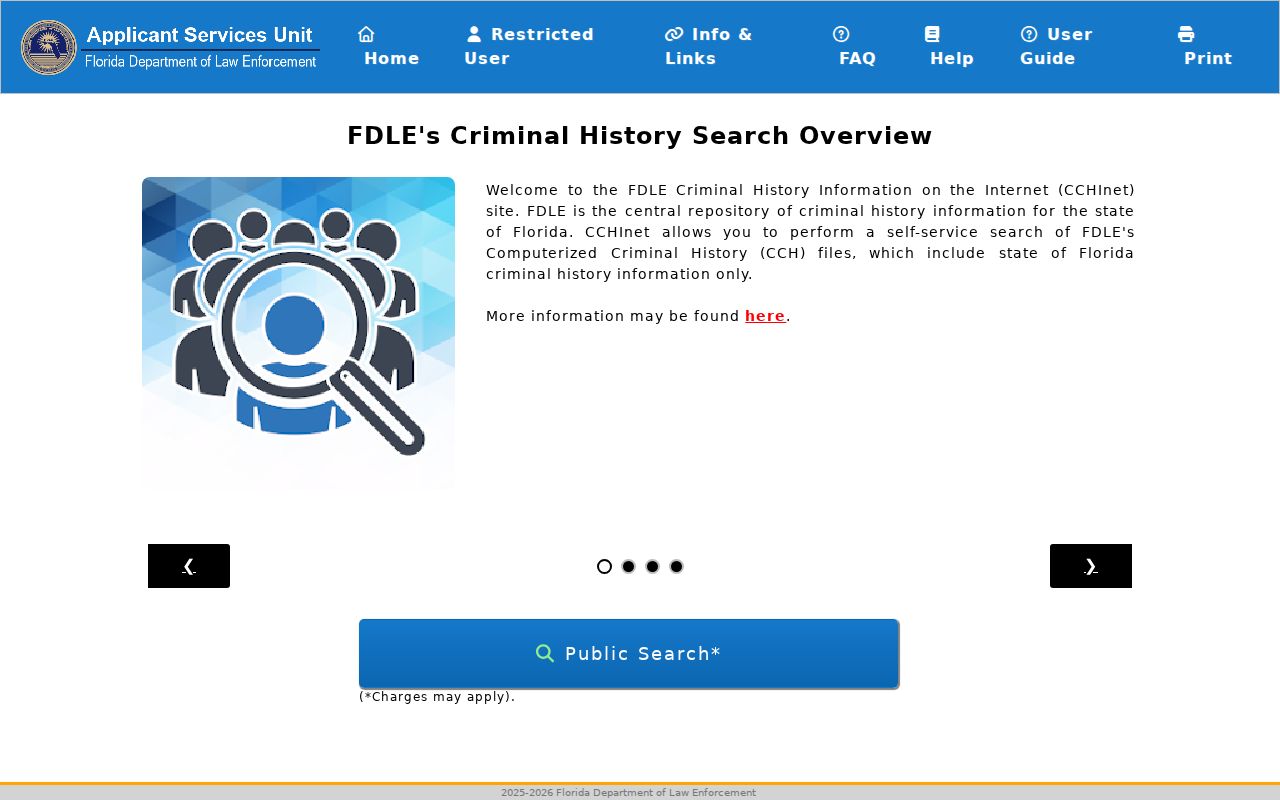
A name result can be a false match and depends on data reported to FDLE. Fingerprint-based checks use approved Livescan providers and an authorized ORI, which is the routing number for the agency entitled to receive the result.
Alachua County FDLE Check Options
FDLE separates public name searches, personal record review, certified results, and checks required under a specific statute. The right channel depends on the purpose and the law authorizing access. A person reviewing their own Florida record can use official FDLE procedures and challenge an identity or disposition error through the originating agency and repository process.
The FDLE Florida checks overview supplied the next image.
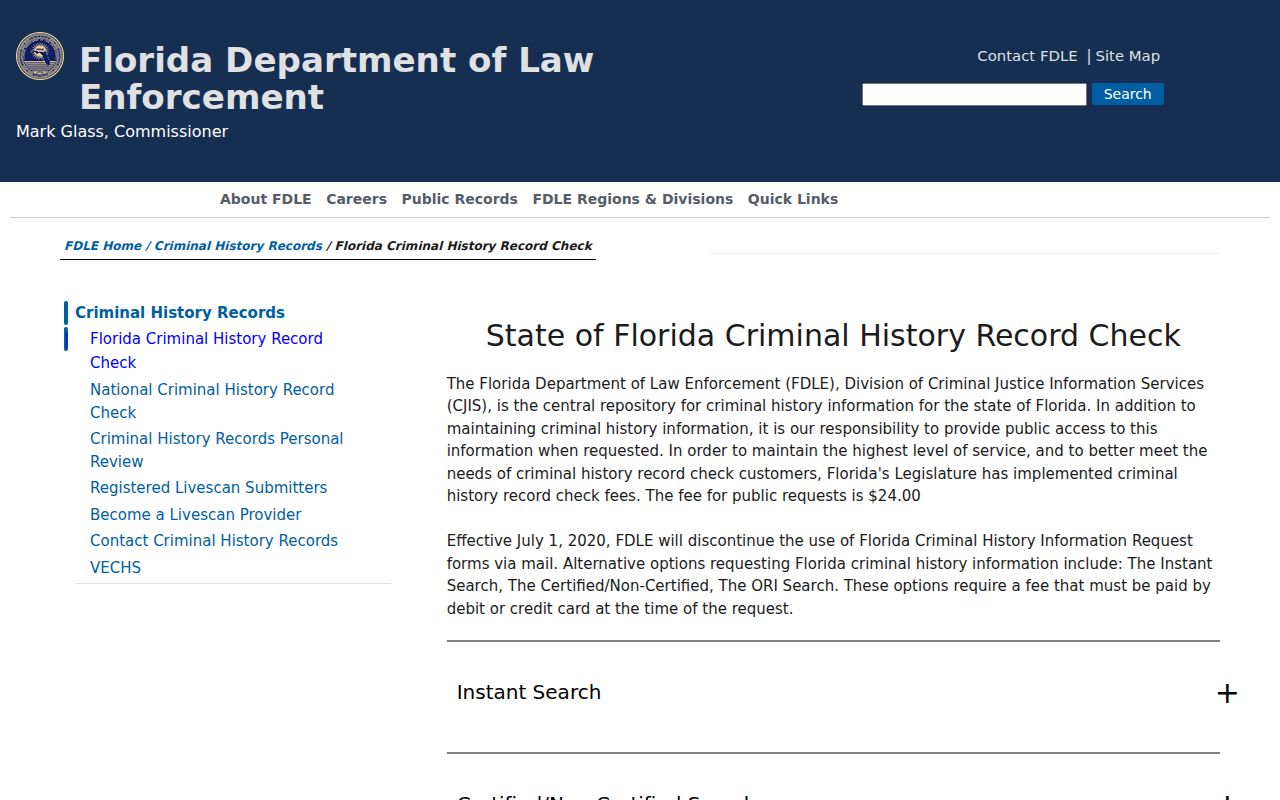
That overview distinguishes the official check products before a reader submits identity data or fingerprints.
The broader FDLE criminal-history repository page supplied this related image.
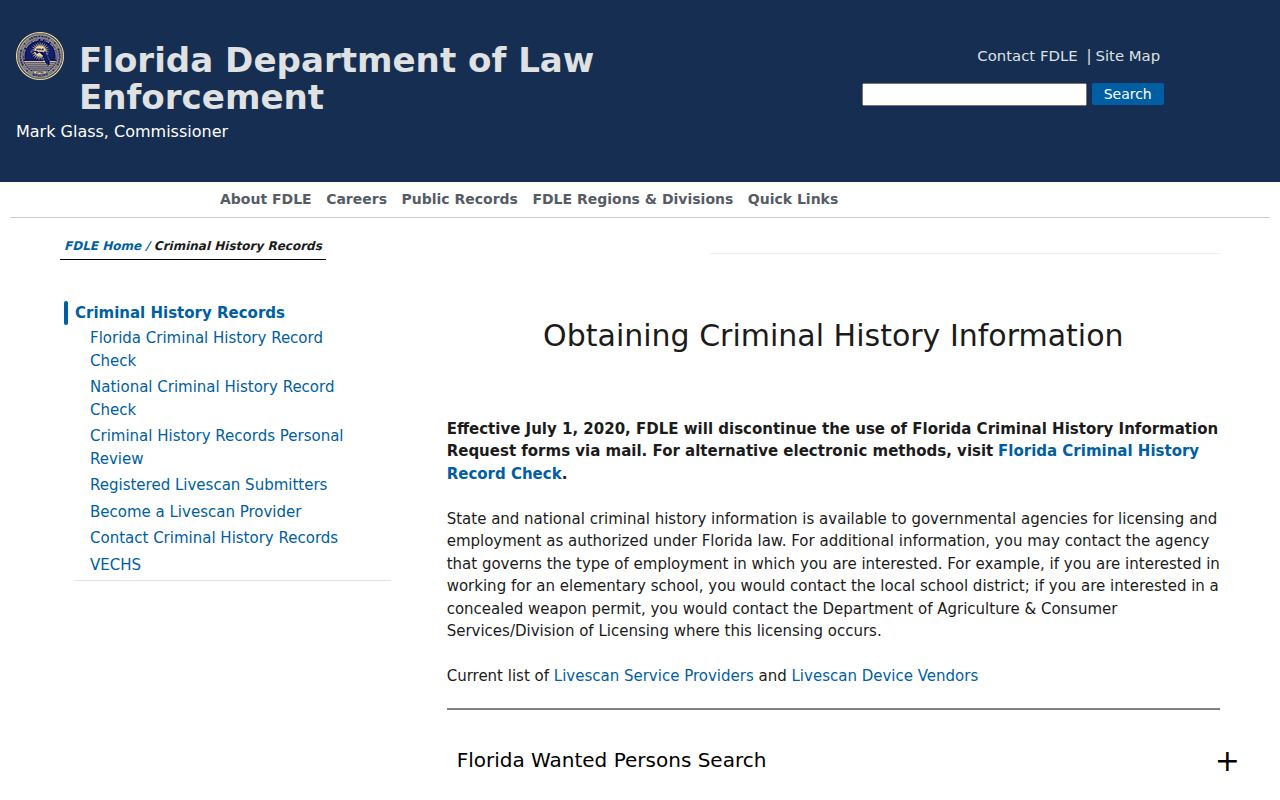
These state products do not replace a certified court judgment or a police narrative. They summarize reported criminal-history information at the Florida level.
ACSO also captures electronic fingerprints at its records window, but that service only collects and transmits prints. It is not itself the statewide result. A statutory fingerprint check needs the correct ORI so the approved recipient receives it. Provider appointments and prices outside ACSO vary. For self-review, follow FDLE's personal review procedure and keep the tracking information needed to question a mismatched arrest cycle or missing disposition.
Criminal Record Types
An officer's report, jail booking, prosecutor filing, court judgment, and FDLE history describe different stages. Warrants come from courts and law-enforcement systems. Probation is supervised through local and state structures, parole decisions come from the Florida Commission on Offender Review, and the Florida Department of Corrections maintains prison and community-supervision information.
Choose the custodian by record type rather than asking one office for a complete life history.
- Arrest and booking records show an agency event and jail intake, not proof of guilt.
- Criminal court files show filed charges, events, orders, disposition, and sentence.
- FDLE history entries connect reported Florida arrest cycles with reported outcomes.
- Warrant records require confirmation with ACSO and the issuing court before action.
- Supervision and registry records come from FDC, the parole authority, FDLE, and local registration offices.
Warrant checks need more than a name hit. ACSO may confirm active county process, while a bench warrant also connects to the issuing Clerk case. Resolve a warrant concern through the sheriff and court rather than relying on an old copy or third-party list. Police reports remain with the arresting agency. The FDLE sex offender registry is another distinct system, searchable by name, city, county, ZIP, or neighborhood radius. Its profiles and status labels serve public-safety notice, not a general court-case search.
For custody after a local sentence, separate the county jail from state prison. The jail generally holds adults awaiting proceedings or serving eligible local terms. FDC becomes the source after a state transfer. VINELink can provide custody notifications, but it is supplemental and is not the official historical booking archive. This source-by-source approach prevents a missing entry in one database from being mistaken for proof that no record exists anywhere.
Alachua County Jail Booking Records
The Alachua County Jail at 3333 NE 39th Avenue is a 1,148-bed adult facility with an optimum population stated as 975. Booking Support records identifiers, fingerprints, photograph, charges, holds, bond, and release data. Current custody is checked through the ACSO inmate search or Jail Records at (352) 491-4444. Historical booking material requires a records request.
Within 24 hours after intake, an arrestee appears for first appearance by closed-circuit video while remaining at the jail. The public watches from the Criminal Courthouse. A release order does not always mean immediate exit. Holds, monitoring, registration, testing, document errors, a required residence, medical events, or security conditions can delay final processing.
Booking flow: Agency report › Jail intake › First appearance › Prosecutor decision › Clerk case › FDLE disposition update
Charges can change along that path. Booking staff enter the arresting agency's information, while the State Attorney later decides whether and what to file. The docket event “information filed” identifies the prosecutor's charging document. A plea is not always the final judgment. Check the disposition and sentencing order, and label each unresolved allegation as an allegation. The county's $6 local arrest history does not supply these Clerk outcomes.
Inside a Alachua County Criminal Record
The contents depend on the source. Booking data reflects intake. A probable-cause affidavit records alleged facts. The prosecutor's information states filed charges, and the final court order controls the outcome and sentence. Never infer a conviction from an arrest or charge line.
| Name & Identifiers | Legal name, aliases, birth date, sex, race, agency numbers, and other matching data where public |
|---|---|
| Arrest / Booking Data | Agency, arrest date, booking number, intake charge, bond, holds, and release status |
| Charges & Statutes | Filed offense description, degree, statute citation, and count information |
| Disposition | Dismissal, nolle prosequi, acquittal, withheld adjudication, or adjudication of guilt |
| Sentence | Controlling judgment, jail or prison term, probation, fines, and court assessments |
| Custody / Supervision Status | Current jail, FDC prison, community supervision, release, or other reported status |
Alachua County Court Services Records
Alachua County Court Services supports pretrial and community programs, but the Clerk remains the custodian of the criminal case docket and final orders. A program entry should not be treated as a conviction without reading the case disposition. Diversion, pretrial release, probation, and sentencing are distinct legal and supervision states.
The Alachua County Court Services source supplied this image.
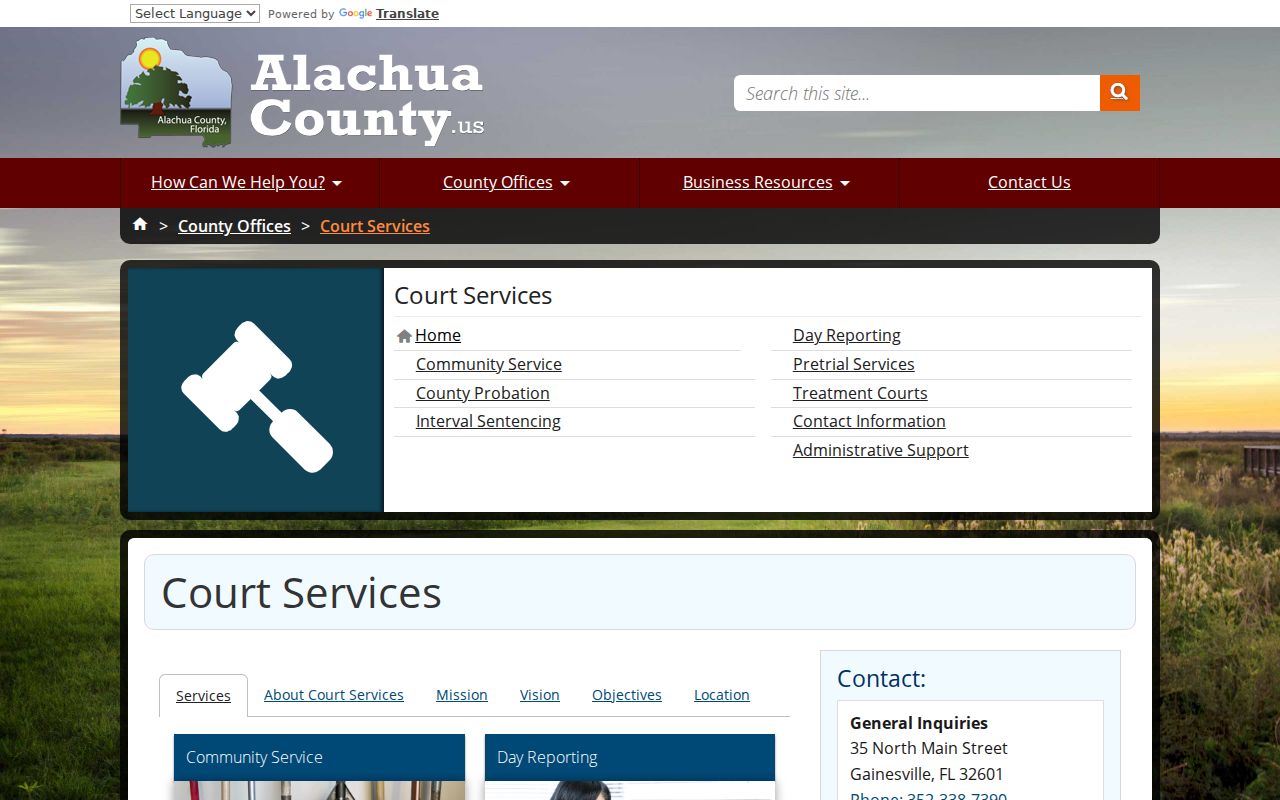
Use the Clerk docket to see whether a program affected the filed case and to locate the final order that records the legal result.
Online access is narrower than legal public access. Many closed criminal cases before 1990 are difficult to research online, and criminal document images generally begin in December 2005. A name may appear in an index without every image. For an older case, give the Records Department at 201 E. University Avenue the name, approximate year, offense or case type, and any number found. Ask whether retrieval involves paper, microfilm, or an archive.
Public Access Laws in Florida
Florida's Public Records Act covers existing nonexempt records held by local agencies. Requests may be oral, and ACSO states that a requester generally need not disclose a purpose. A written, narrow request still helps define the record, date, location, and event number. Agencies may redact protected parts rather than withhold an entire record when an exemption applies.
Key Statutes:
Florida Statutes Chapter 119 - grants access to nonexempt public records and permits lawful copy and extensive-use charges.
Florida Statutes § 943.045 - defines criminal-justice information terms.
Florida Statutes § 943.053 - governs dissemination of criminal-history information by FDLE.
Florida Statutes § 943.0585 - governs expunction.
Florida Statutes § 943.059 - governs sealing.
Alachua County Record Request Costs
ACSO separates immediately available records from requests that consume more staff time. A request reaching 20 pages or requiring more than 15 minutes can produce charges. Labor uses the producing employee's salary plus benefits and is calculated to the nearest quarter hour. The published policy includes the first 15 minutes once the charge applies.
A requester may inspect before buying copies, but redaction and supervised review can still cost money. If an estimate is high, ask which record type drives it, separate reports from audio or video, narrow the time segment, or request an electronic-native export.
| Item | Published Amount |
|---|---|
| Single-sided page | $0.15 |
| Double-sided page | $0.20 |
| ACSO local arrest history | $6 |
| ACSO electronic fingerprints | $10 |
| Clerk court or official-record copy | $1 per page |
Sealed, Expunged, and Restricted Records
Florida distinguishes sealing from expunction. A sealed record is restricted from ordinary public view but remains available to specified agencies. Expunction generally requires the custodian to destroy or remove the covered record from ordinary access, subject to statutory exceptions. Eligibility is technical and depends on the case, prior history, disposition, and FDLE certification process.
Juvenile records, active investigative material, victim and witness information, medical data, and court-restricted documents may also be unavailable or partly redacted. A blank web result does not prove that no record exists. It may reflect restricted access, electronic-viewing rules, an older paper file, or a search mismatch.
Alachua County Corrections Records
The Florida Department of Corrections Offender Network is the official state layer for prison and community-supervision status. It is separate from the county jail roster. A person transferred to FDC may disappear from current county custody while remaining in state custody. The FDC offender search supplied this image.
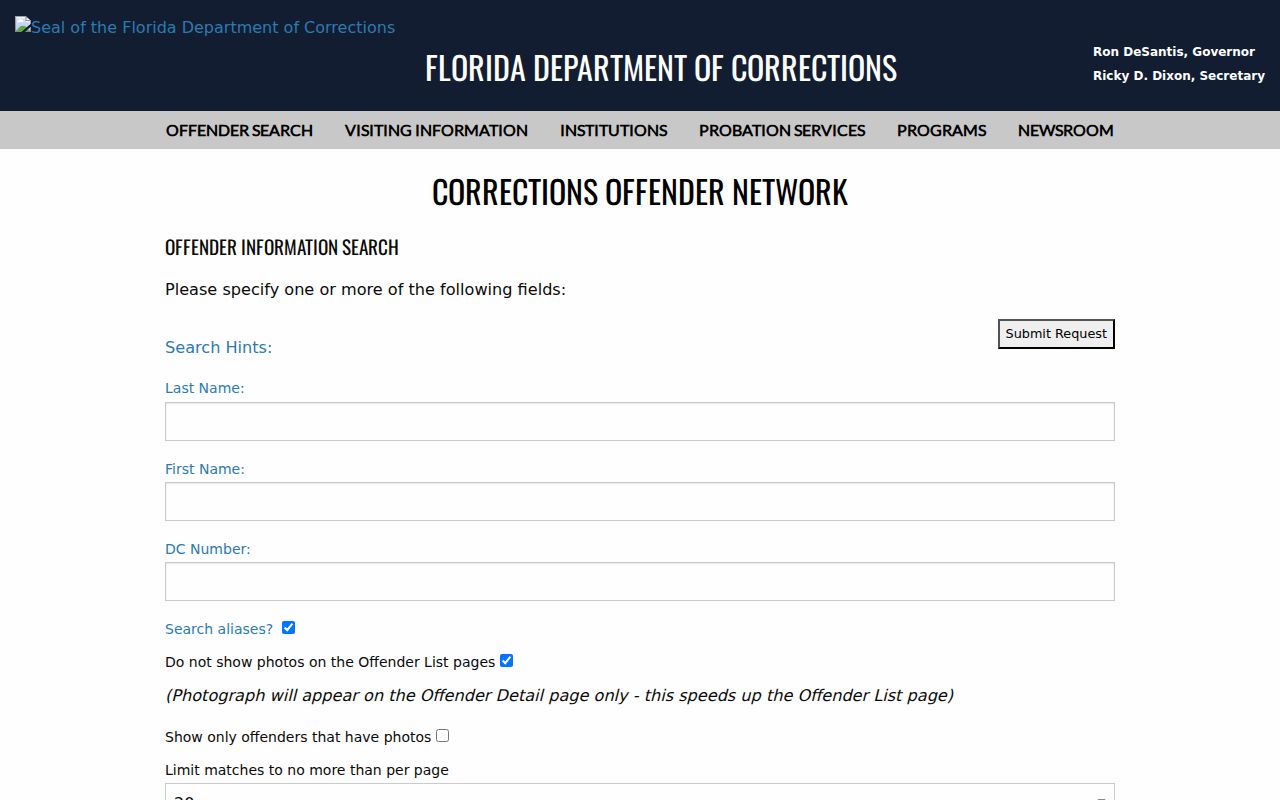
The FDC result is the state custody and supervision layer, not the county booking record or court judgment.
Parole decisions and supervision authority involve the Florida Commission on Offender Review, which supplied the next image.
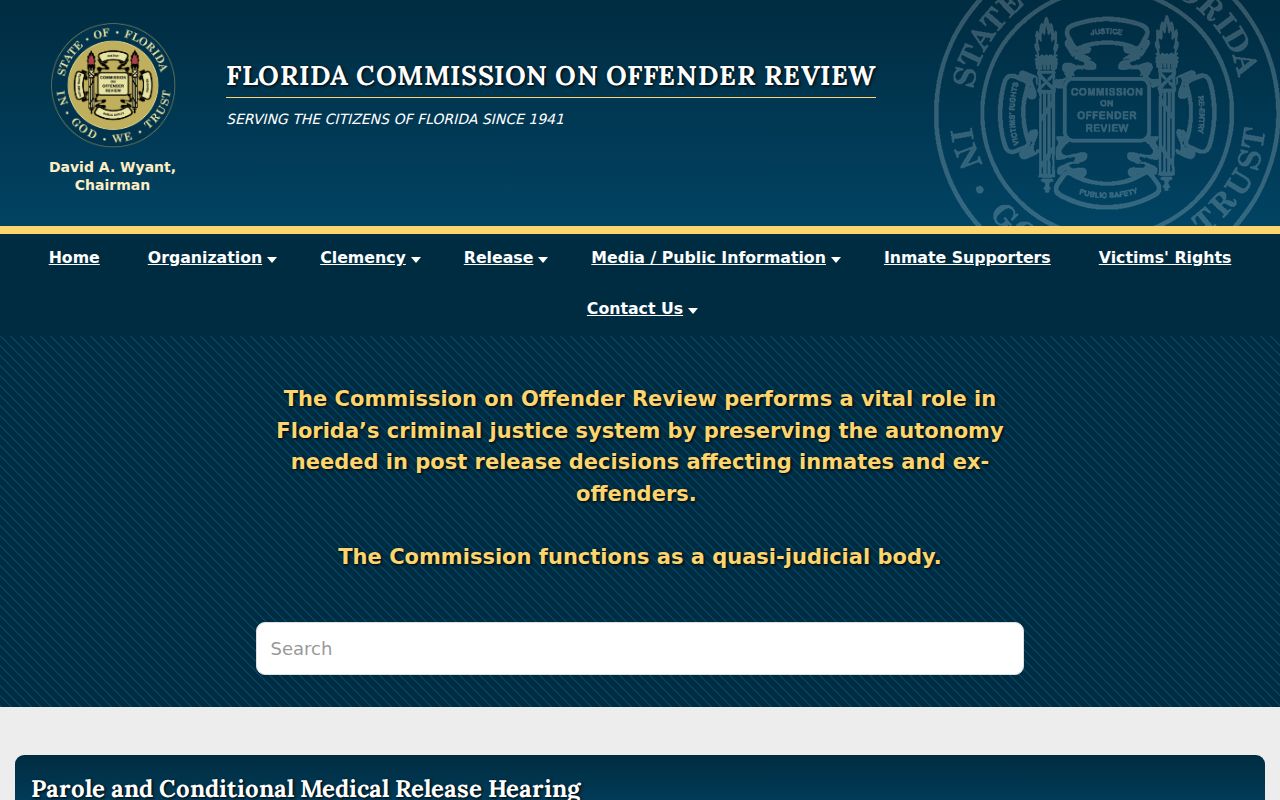
Read county jail, FDC, and Commission records as separate layers. A local sentence, state prison term, probation status, and parole decision are not interchangeable.
Alachua County Crime Data Context
Aggregate crime data answers a different question from a person-level record search. The FBI Crime Data Explorer provides agency and jurisdiction statistics and supplied this image.
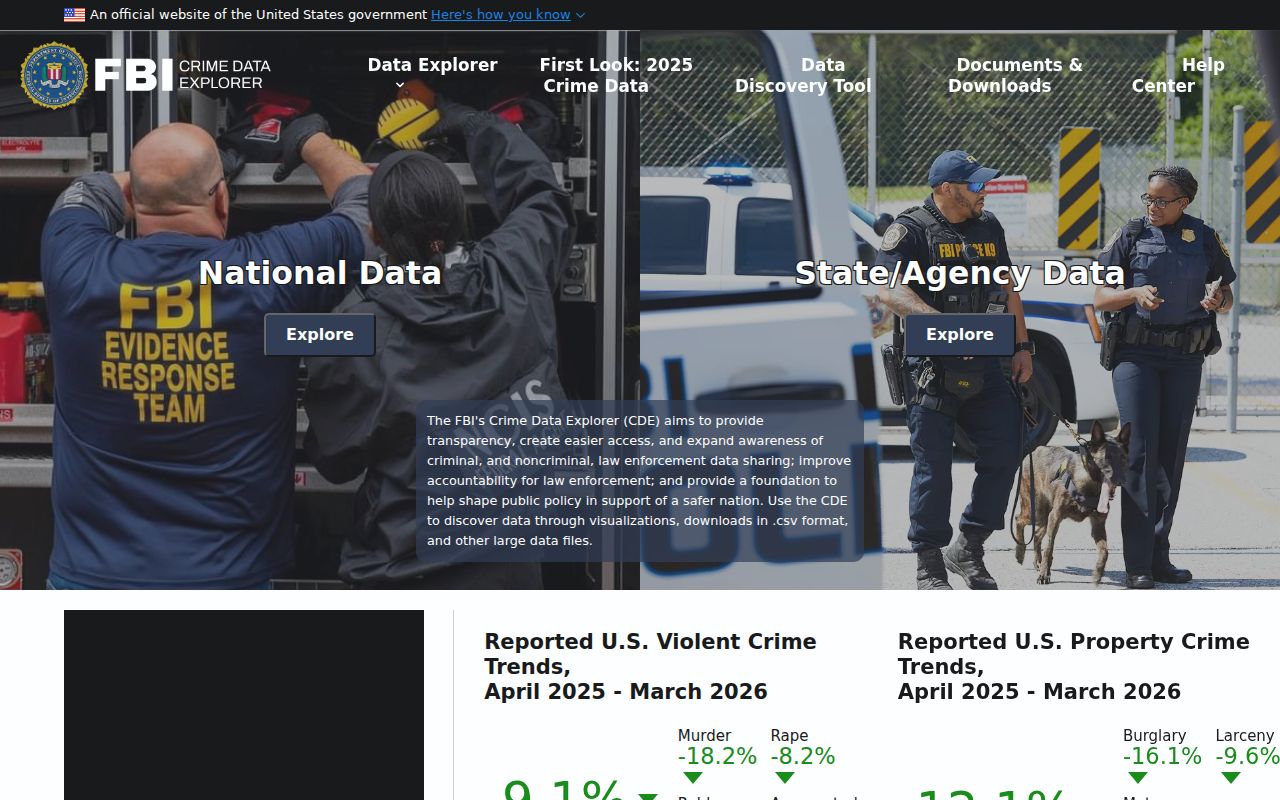
Use those figures to understand reported trends, not to infer facts about a named person or neighborhood. Alachua County includes Gainesville, a large university, rural municipalities, state roads, hospitals, and state institutions. Reports may therefore begin with city, campus, county, highway, state, or federal agencies. Agency coverage and reporting practices shape the totals.
Alachua County Criminal Records by City
City police departments keep the reports they create, while adult custodial bookings and state prosecutions converge in county systems. Gainesville is the largest incorporated city and county seat. Alachua ranks second, and High Springs ranks third under the official state population table. Start with the responding city department, then follow a booking to ACSO, a filed charge to the Clerk, and a statewide history to FDLE.
Gainesville Criminal Records
GPD reports route through the Gainesville City Clerk; county booking and prosecution remain separate.
Alachua Criminal Records
APD Records keeps city reports; ACSO and the Clerk hold later county stages.
High Springs Criminal Records
HSPD asks callers to request records in advance and may deliver them electronically.